Understanding Metrics: Leading vs. Lagging and Progress vs. Outcome Metrics (9/52)

Metrics play a crucial role in assessing the performance and success of any business or project. By understanding the different types of metrics and how they can be used effectively, organizations can make informed decisions and drive continuous improvement.
In this blog post, I will discuss two key distinctions in metrics: leading vs. lagging metrics and progress vs. outcome metrics.
I'll also provide examples to illustrate their importance in various business scenarios.
Leading vs. Lagging Metrics
Leading Metrics: Leading metrics are forward-looking indicators that help predict future performance or outcomes. They provide real-time feedback on current activities and can be used to identify potential risks, adjust strategies, and make proactive decisions.
Examples of leading metrics include:
Number of sales leads generated
Website traffic and engagement
Employee satisfaction scores
Lagging Metrics:
Lagging metrics are backward-looking indicators that measure past performance or results. These metrics help assess the effectiveness of previous actions and strategies, and they often serve as a basis for future improvements.
Examples of lagging metrics include:
Revenue generated
Customer satisfaction scores
Employee retention rates
Understanding the balance between leading and lagging metrics is essential for effective decision-making. While leading metrics help organizations to be proactive and make adjustments, lagging metrics provide insights into the effectiveness of past actions.
Progress vs. Outcome Metrics
Progress Metrics: Progress metrics, also known as process metrics, track the efficiency and effectiveness of ongoing processes or tasks. They focus on the steps taken to achieve a particular outcome or goal. Examples of progress metrics include:
Average time to resolve customer support tickets
Number of completed tasks in a sprint
Percentage of code covered by tests
Outcome Metrics: Outcome metrics, also known as result metrics, measure the final results or impact of a project or initiative. They help evaluate whether the desired objectives have been achieved. Examples of outcome metrics include:
Net Promoter Score (NPS)
Market share
Return on Investment (ROI)
To drive continuous improvement, organizations should use both progress and outcome metrics. Progress metrics help identify inefficiencies and optimize processes, while outcome metrics ensure that the organization is achieving its strategic goals and objectives.
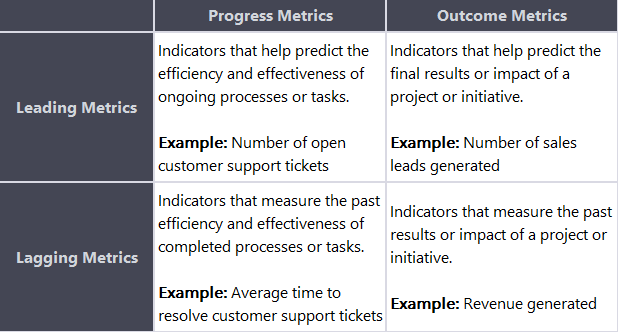
Understanding the differences between leading vs. lagging and progress vs. outcome metrics is crucial for making informed decisions and driving continuous improvement in any organization.
By carefully selecting and balancing these metrics, businesses can proactively manage risks, optimize processes, and ultimately achieve your strategic goals.